

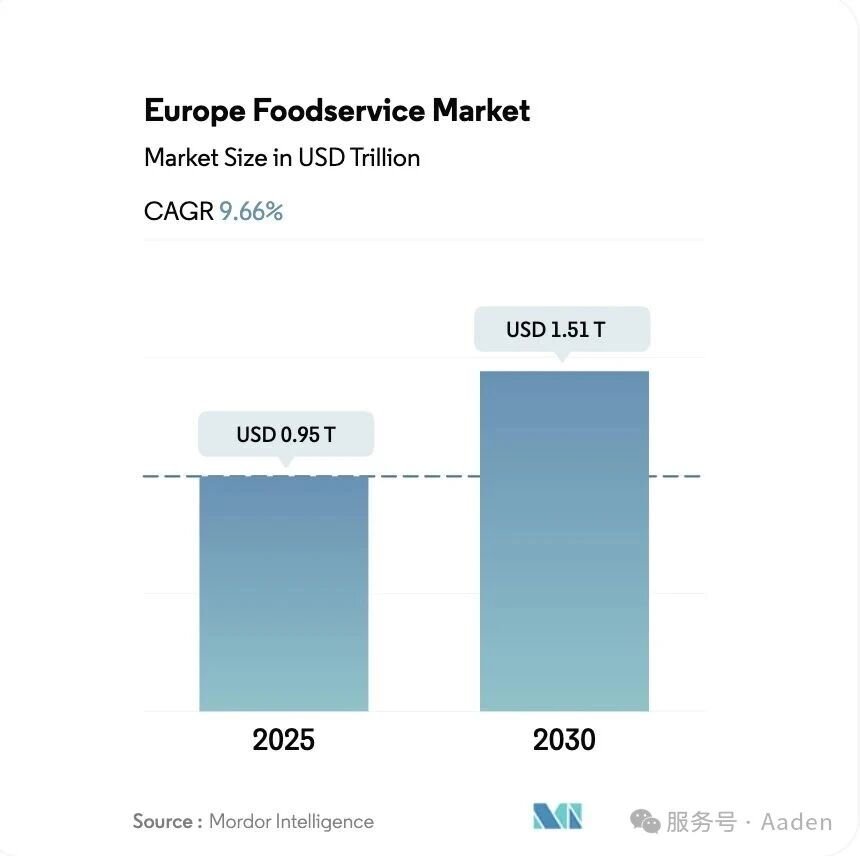
The European food service market is experiencing robust growth. According to official data from Mordor Intelligence, the size of the European food service market is projected to reach $954.58 billion in 2025 and is expected to grow to $1,515.78 billion by 2030, with a stable compound annual growth rate (CAGR) of 9.66% during the forecast period.
1、Market Drivers
Urbanization and the Rise of Single-Person Households
Changes in Europe’s demographic structure and the surge in single-person households are driving the growth of the European food service market. According to Eurostat data, in 2023, over 36% of EU households consisted of single individuals, a 15% increase since 2000, with countries like Sweden and Germany exceeding 40%. This trend is closely linked to a decrease in home cooking frequency and an increased reliance on prepared foods. Due to constraints in cooking space and time, working professionals in cities such as Berlin and Paris are increasingly opting for restaurant lunches or evening takeaway meals.

Expansion of Digital Platforms and Technological Infrastructure
The digitalization process is also bringing structural opportunities to the industry. The integration of digital ecosystems with food service operations has significantly expanded consumer access channels and transaction frequency, thereby driving the growth of the European food service market. According to a report cited by the German newspaper *Handelsblatt* on November 12, 2021, referencing the “EU Digital Economy and Society Index (DESI),” Germany’s digitalization level ranked 11th among the 27 EU countries, with a score of 54.1, slightly above the EU average of 50.7. This indicates that Europe’s overall digitalization level still has room for improvement, with considerable potential for technology-enabled advancements.
2、Opportunities and Challenges Coexist
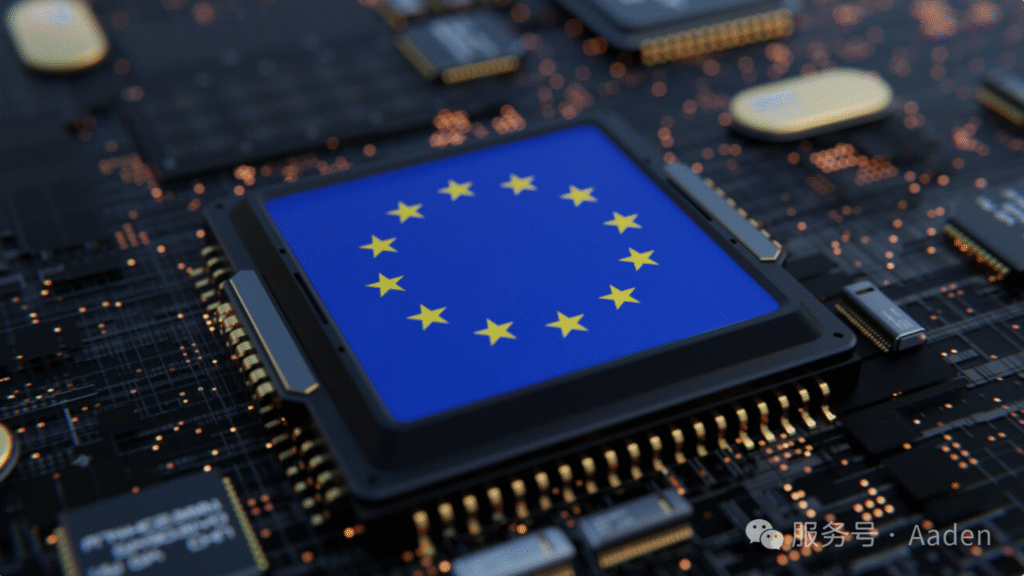
Driven by the rapid development of machine learning, the Internet of Things, and computer technology, artificial intelligence and automation are profoundly transforming food service operations. Applications such as predictive maintenance, intelligent process automation, and AI quality control systems are gradually becoming widespread. While these technologies enhance operational efficiency and reduce human errors, they also present new challenges for businesses, including increasingly stringent market compliance requirements and pressures to transform mid-to-high-level management models.
3、Facing the Challenges, Aaden POS Is the Solution Tailored for You
On the compliance front, the Aaden system deeply integrates core EU tax regulations such as Germany’s TSE, France’s NF525, and Italy’s fiscal devices, enabling automatic encryption and submission of transaction data. This transforms cumbersome compliance processes into a reliable, silently running backend safeguard.
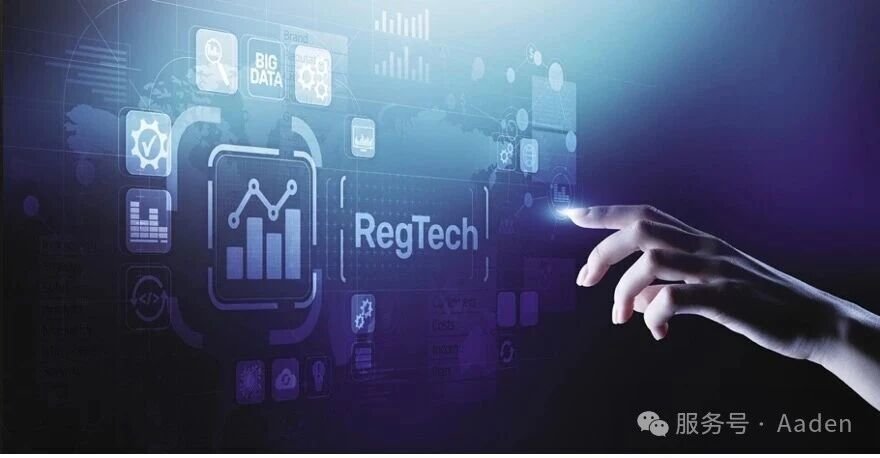
- On the management front, Aaden offers far more than just a cash register tool. By integrating mobile data dashboards, intelligent inventory management, and an all-in-one member marketing system, we help mid-to-high-level managers gain real-time insights into multi-store operations and make data-driven scientific decisions. This enables a smooth and efficient transition to a digitalized management model.

The essence of technology is to serve people. Amid the accelerating wave of digitalization in Europe’s food service industry, Aaden is committed to being your most reliable partner, embracing the future together and navigating changes with confidence.