


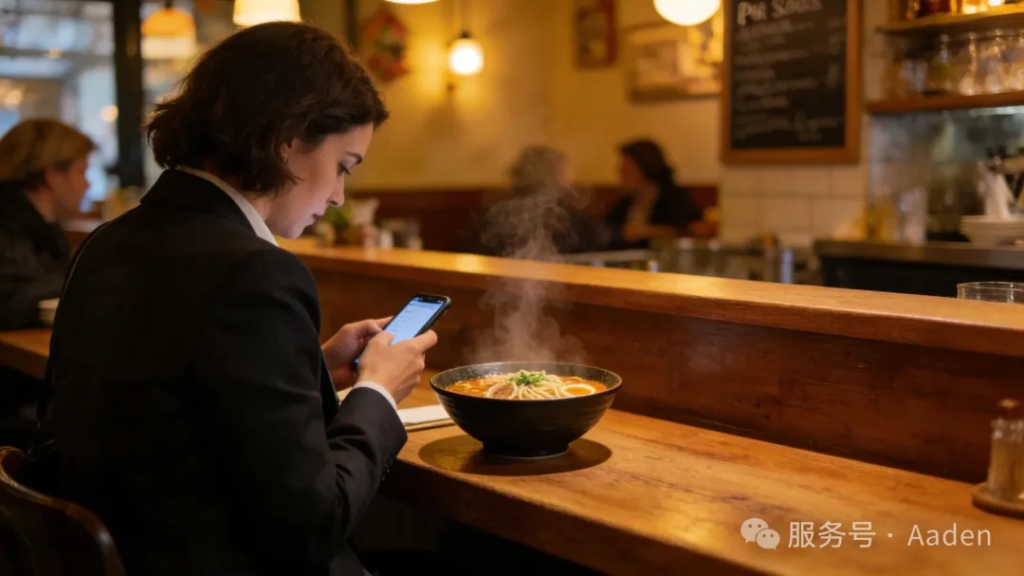
At a bistro on Paris’s Left Bank, a lady in a business suit sits at the bar, scrolling quietly on her phone with a steaming bowl of Japanese ramen in front of her. She has no dining companion and shows no sign of discomfort. After handing over the menu, the server steps back discreetly. Ordering, payment and food‑service take place with barely any verbal exchange.
Scenes like this might have carried a hint of “social misfit” five years ago. Yet in Europe in 2026, dining alone is no longer an exception — it has become mainstream.
1. Hard Data: Solo Dining Is Turning into a Dominant Consumer Behaviour
Figures from Eurostat, OECD and market researcher Euromonitor reveal a clear‑cut trend: Between 2010 and 2019, the share of solo diners in full‑service restaurants rose from 8.2 % to 15.6 %.
From 2020 to 2025 growth accelerated further. In highly urbanised countries including Germany, the Netherlands and the Nordic nations, over 20 % of dine‑in orders come from single guests.
Remarkably, annual catering spending by solo diners has surged by 159 %, vastly outpacing family meals (+47 %) and get‑togethers with friends (+63 %).
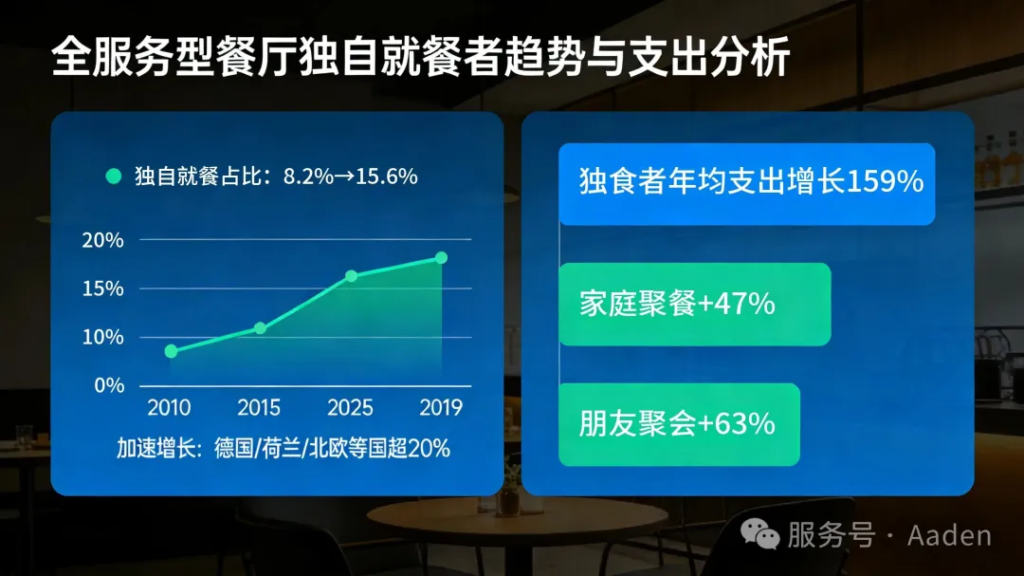
In short: more people are eating out alone — and they are willing to spend significantly more money.
2. Why Have Europeans Grown Accustomed to Dining Solo?
This shift reflects profound changes in social structures and lifestyles:
Widespread remote work In the post‑pandemic era, hybrid work has become standard. Many people finish their morning work in cafés or small restaurants and grab lunch on‑site. This is neither pure socialising nor merely eating: it is everyday use of the “third place”.
Sharp rise in single‑person households Eurostat data shows nearly 40 % of 30‑45‑year‑olds across the EU were long‑term single in 2025. For them, waiting for friends to be free for a meal carries too high a cost. Dining on demand is preferable.
Rise of social‑anxiety culture Especially in German‑speaking regions and the Nordic countries, “avoiding unnecessary small talk” is regarded as a form of life wisdom. Instead of forcing awkward pleasantries, many prefer enjoying their meal in peace. Eating reverts to a private act.
Growing independent spending power among women More and more professional women no longer view entering a restaurant alone as risky or embarrassing. Instead, they treat it as a ritual of self‑reward.
3. Challenges for Chinese Restaurants: Still Designed for Group Dining
While European consumers are embracing solo dining, many Chinese‑run restaurants still operate under the logic of round‑table shared meals:
- Menus only offer large‑portion dishes, with minimum spend often hitting 30 EUR.
- Dining rooms are filled with four‑seat and six‑seat tables, making single guests feel out‑of‑place.
- Servers frequently comment: “Are you dining alone?” Well‑intended as it may be, this can create psychological pressure.
- Orders rely entirely on verbal communication, causing stress for guests with language barriers.
This is not bad service — it is a mismatch with real‑life scenarios.
By contrast, Japanese ramen bars, Vietnamese pho eateries and local fast‑food chains have long adapted to the solo‑diner economy:
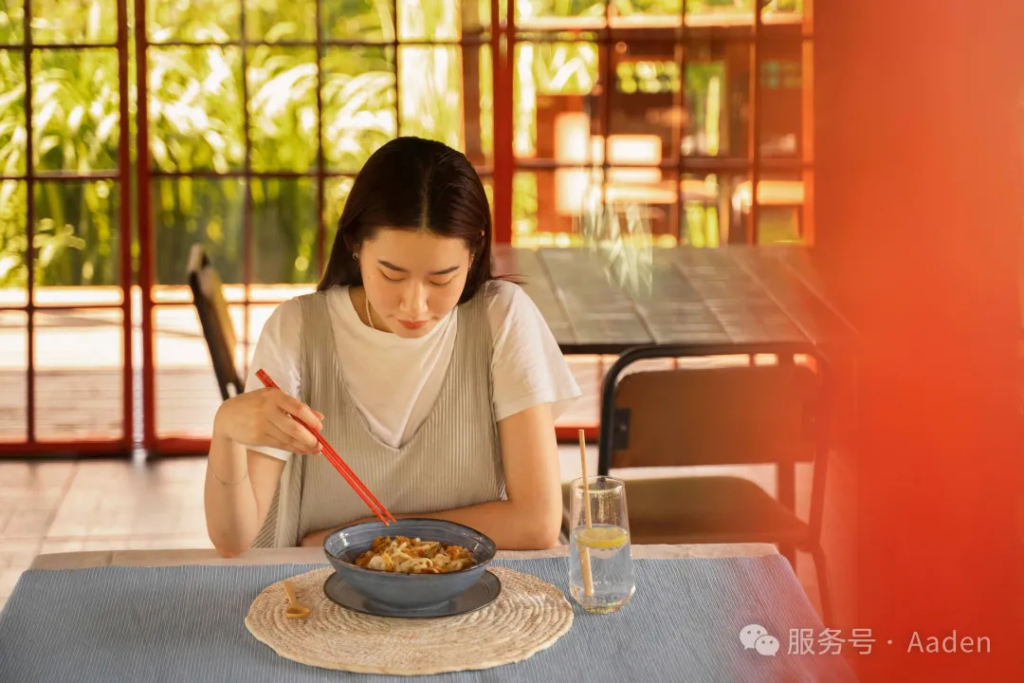
- Bar‑style single seats facing towards the kitchen or street deliver privacy without total isolation.
- Small‑portion set menus (e.g. “one‑person dan‑dan noodles plus side dish and drink combos”).
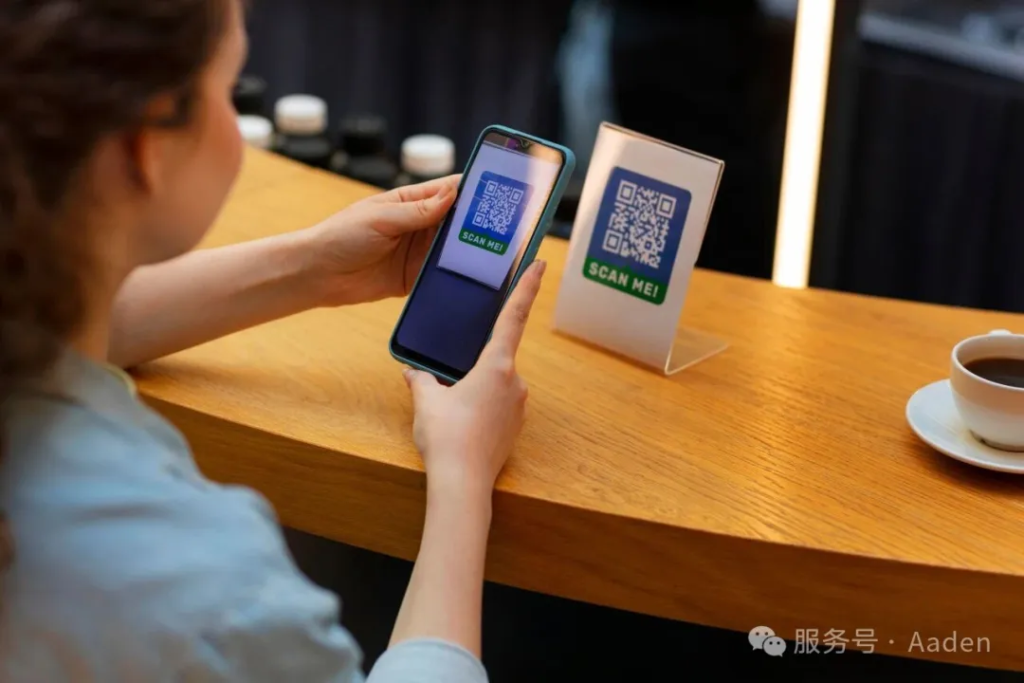
- QR‑code ordering to reduce language hurdles and social pressure.
- Food served within 10 minutes to match demand for efficient meals.
4. Insights for Chinese Catering Brands
The rise of solo dining does not mean abandoning group‑oriented dining traditions. Family reunion dinners for Chinese New Year and celebratory meals with friends remain essential. Nevertheless, it sends an important reminder: Hospitality exists to satisfy human needs, not to stick to outdated operating habits.
Catering brands that thrive in Europe going forward will likely feature these attributes:
- Flexible menus: capable of serving eight‑person banquets as well as quick single‑person meals.
- Adaptable space: private booths alongside quiet nooks for solo guests.
- Respectful service: warm yet unobtrusive, professional and free of judgement.
- Efficiency‑focused experience: letting solo guests dine comfortably and leave without hassle.
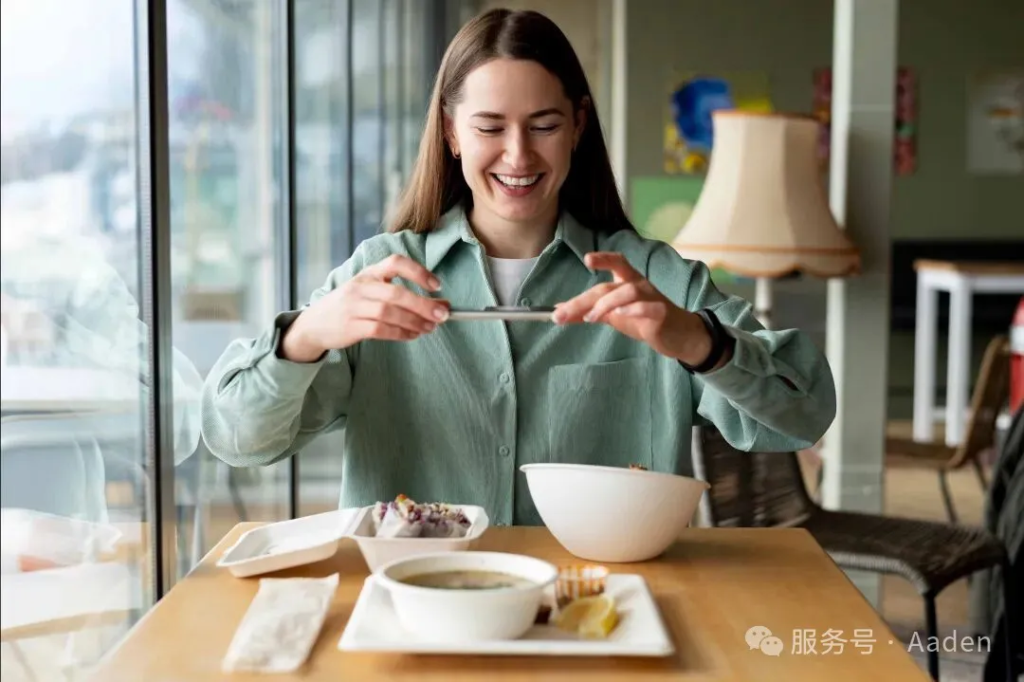
Eating alone should never require courage. As society respects the “right to solitude”, the hospitality industry ought to deliver “dignity for solo diners”.
Next time a guest walks into your restaurant by themselves, instead of asking “Are you alone?”, quietly hand them a menu suitable for one. That is true hospitality.

Scan the QR code to get your exclusive digital solution